
Middle School
Upper Elementary School (5th and 6th grades)
The educational program for the second cycle of basic education at CSDB is based on the same principles as the pedagogical and social-constructivist model of the Modern School Movement, with a strong emphasis on the internationalization of the curriculum. This is achieved through the Content and Language Integrated Learning (CLIL) pedagogical approach, which promotes the integrated learning of certain curriculum content in English, preparing students for the real world.
In an increasingly multilingual and interdependent global context, the educational program for the 2nd Cycle of Basic Education integrates the curriculum with the English language, emphasizing collaborative work, differentiated instruction, and active student participation—core principles of the model followed by CSDB.
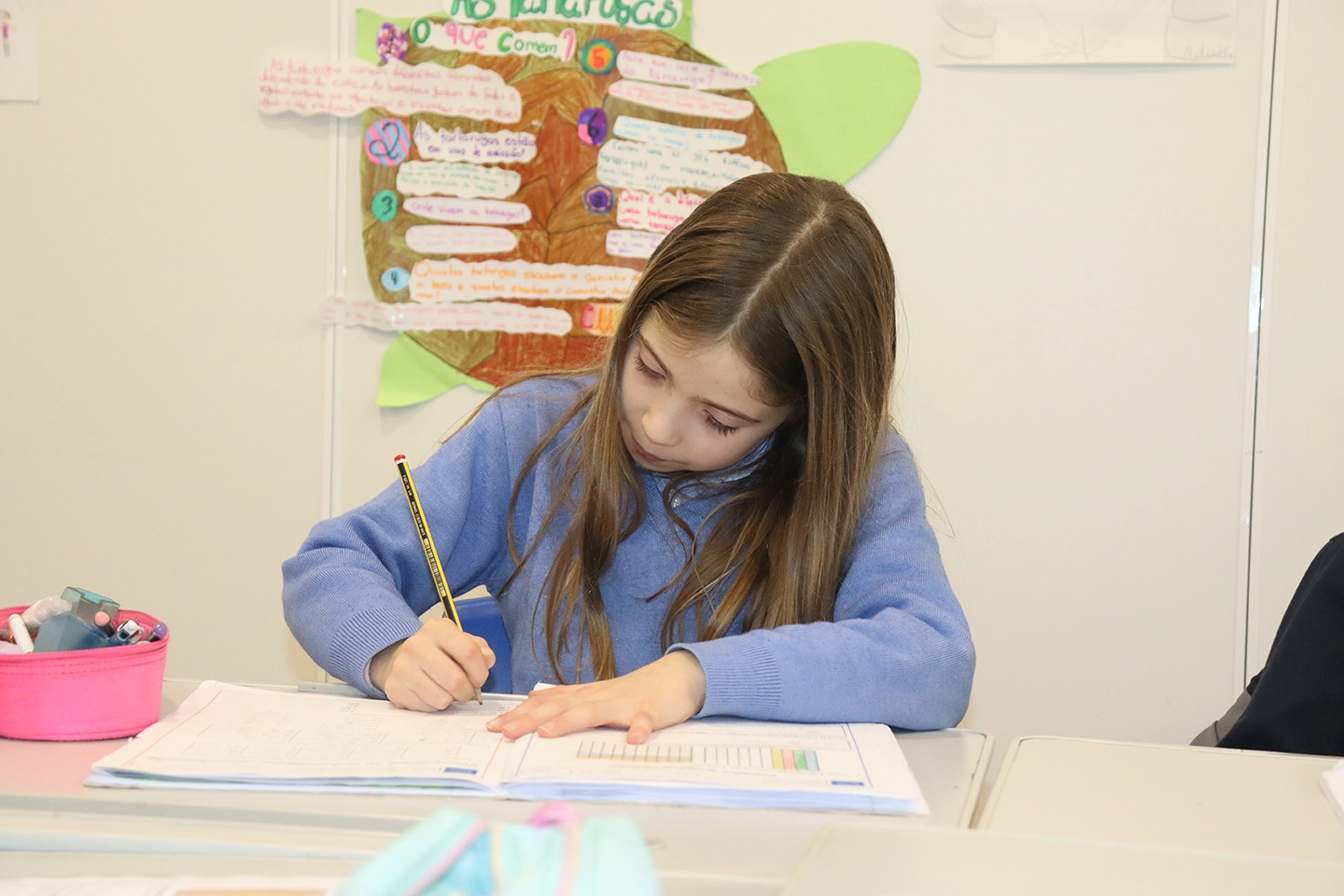
The teaching-learning process is organized around a student-centered approach, viewing the classroom as a space for social interaction where knowledge is shared, relationships are built, and meaningful learning is fostered. The educational approach emphasizes differentiated instruction, tailored to the needs and potential of each student, rather than a one-size-fits-all teaching model.
The daily dedicated time for independent study allows teachers to provide individualized support, helping students overcome challenges and develop their skills. In addition, opportunities for collaborative work are provided, organized into multi-level learning groups in which 5th- and 6th-grade students work together, guided by two teachers, fostering mutual support and the shared construction of knowledge.
Interdisciplinarity plays a central role through project-based learning, the contextualization of content, and the integration of academic disciplines with the English language. Learning is connected to the students’ and the class’s real-life experiences, fostering a deeper and more meaningful understanding of the subject matter.
Throughout the program, students’ autonomy and sense of responsibility are fostered, as they are actively involved in the conscious management of their own learning process. There are weekly sessions for planning, evaluation, and group reflection, which are essential to the students’ social and moral development and to the collaborative organization of classwork.
The lessons learned are regularly communicated and shared, emphasizing self-expression, reflection, and recognition of each student’s individual journey. Assessment is primarily formative and descriptive in nature, supporting the final summative assessment and serving to guide the learning process.
The integration of the curriculum with the English language is achieved, through the CLIL approach, in Physical Education classes, in certain Natural Sciences topics, and in interdisciplinary projects conducted in English, taught by teachers proficient in the language, with technical and pedagogical support from the school’s English teacher.
The students’ educational journey is also aligned with learning certification under the University of Cambridge system, consistent with CLIL practices, helping to prepare students for an increasingly demanding and global academic and professional future.


