
Elementary School
“Building Knowledge. Learning with Motivation”
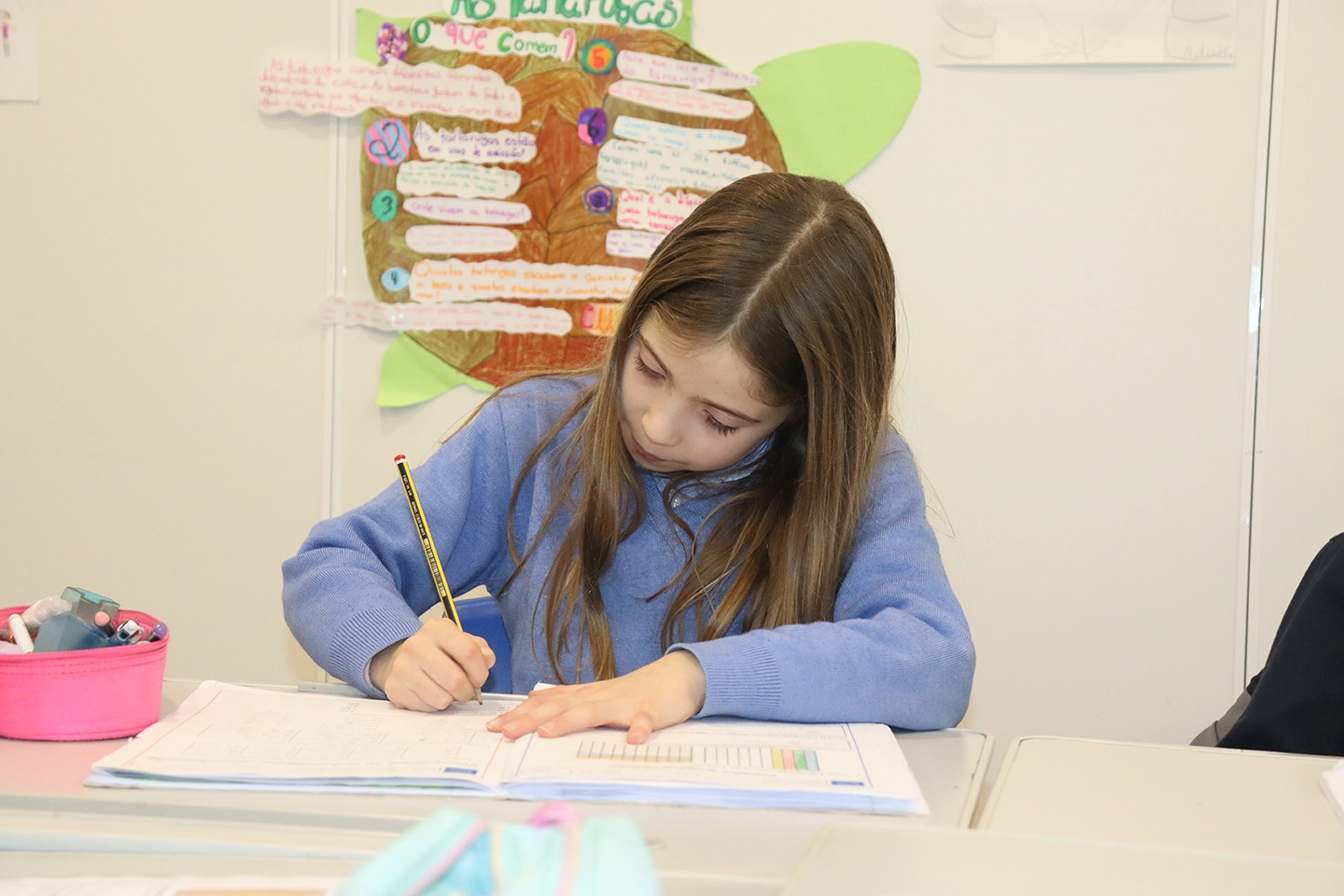
Educational work is organized through Individual Work Plans and a Weekly Schedule, which are established with the students at the beginning of each week and recorded in their daily notebooks. This approach promotes self-regulation, autonomy, and active student engagement in their learning journey.
The classroom and materials are arranged with careful thought, creating an environment that fosters independence, responsibility, and the development of self-esteem. Essential Learning is taught in a flexible manner, allowing each student to move on to more challenging tasks or reinforce concepts that require further practice.
Independent Study Time is a personalized session during which differentiated instructional strategies are used to help students overcome difficulties and practice the material covered in class. At the same time, there are opportunities for collaborative learning activities—whether in large groups, in pairs, or in small groups—that begin with a dynamic introduction to the topics, proceed through active exploration, and culminate in the sharing, discussion, and consolidation of what has been learned.
Independent Study Time is a personalized session during which differentiated instructional strategies are used to help students overcome difficulties and practice the material covered in class. At the same time, there are opportunities for collaborative learning activities—whether in large groups, in pairs, or in small groups—that begin with a dynamic introduction to the topics, proceed through active exploration, and culminate in the sharing, discussion, and consolidation of what has been learned.
Project work plays a central role, drawing on the students’ curiosities and interests, which are recorded on a dedicated map. Proposals are reviewed collectively, aligned with curricular objectives, and developed collaboratively, always culminating in a collective report and summary that ensures everyone’s progress.
Project work plays a central role, drawing on the students’ curiosities and interests, which are recorded on a dedicated map. Proposals are reviewed collectively, aligned with curricular objectives, and developed collaboratively, always culminating in a collective report and summary that ensures everyone’s progress.
Cooperative conflict management is viewed as an educational opportunity. Through dialogue, reflection, and accountability, values such as respect, tolerance, and empathy are fostered, helping students understand the consequences of their actions and find constructive solutions.
By design, assessment is fundamentally formative and educational in nature, with a qualitative focus. Students actively participate in setting goals, planning their work, and developing assessment criteria, thereby taking ownership of the tools that guide and shape their learning.
We believe in a close and collaborative relationship between the school and families, based on mutual respect and mutual support. The presence and involvement of families reinforce the value of schoolwork and contribute to students’ emotional well-being and motivation.
The Educational Cooperation Council, which meets weekly, serves as a key forum for the collective management of class life, where students and teachers reflect on learning, relationships, and the functioning of the group, fostering social and moral development and a sense of responsibility.
Classrooms are viewed as true learning laboratories, equipped with interactive whiteboards and integrating Information and Communication Technologies on a daily basis across different curricular areas.
Artistic Expression also plays a significant role in the students’ holistic education, as does English language learning, which is provided for five class periods per week.


